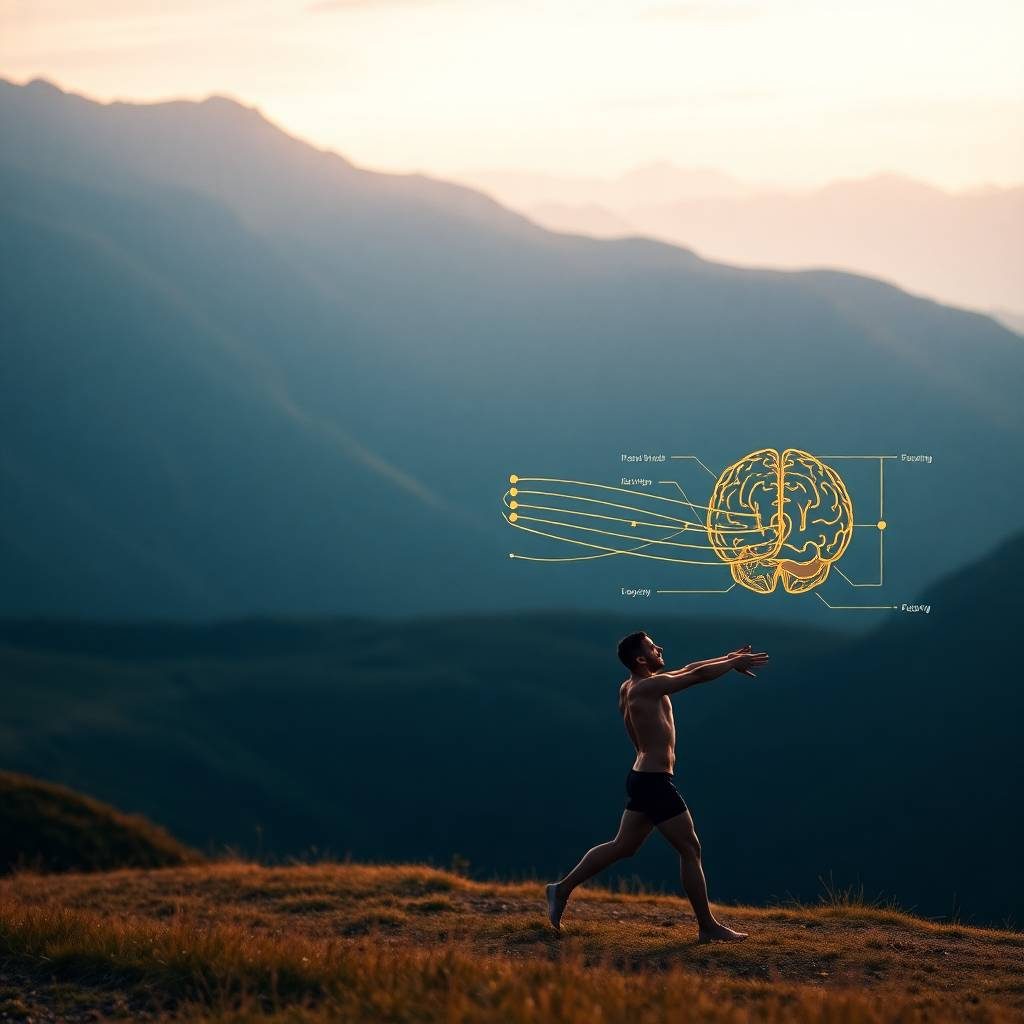
30-Minute Daily Flow Training Program for Athletes
Evidence-Based Protocol for Peak Performance States
This program integrates research-validated interventions from sports psychology, neuroscience, and performance science to systematically train athletes to access flow states. Flow, defined by Mihaly Csikszentmihalyi as the optimal state of consciousness where peak performance and deep enjoyment converge, can be developed through deliberate practice.
The protocol combines nine evidence-based techniques across four phases, designed to fit into 30 minutes of daily practice.
Research Foundation
Core Flow Triggers (Supported by Research)
Challenge-Skill Balance: 4% challenge above current skill level optimizes flow entry (Csikszentmihalyi, 1990).
Clear Goals & Immediate Feedback: Enhance attentional focus and maintain engagement (Jackson & Csikszentmihalyi, 1999).
Deep Embodiment: Present-moment awareness activates flow-facilitating brain networks (Dietrich, 2004).
High Consequences: Physical or mental risk increases norepinephrine and dopamine, accelerating pattern recognition (Kotler, 2014).
Neurophysiological Mechanisms
Flow states are characterized by transient hypofrontality—temporary deactivation of the prefrontal cortex—which reduces self-criticism and enhances implicit processing. This state is mediated by elevated levels of dopamine, norepinephrine, and endorphins, creating heightened focus and intrinsic motivation (Kotler & Wheal, 2017).
The 30-Minute Daily Protocol
Perform this protocol 5–6 days per week, preferably at the same time daily.
Phase 1: Arousal Regulation & Centering (7 minutes)
Goal: Activate parasympathetic nervous system, optimize arousal level.
Minutes 0–4: Box Breathing Protocol
Evidence: Controlled breathing reduces cortisol by 24% and increases heart rate variability (Russo et al., 2017).
Protocol: Inhale (4 counts) → Hold (4 counts) → Exhale (4 counts) → Hold Empty (4 counts). Repeat for 6–8 cycles.
Minutes 4–7: Body Scan & Proprioceptive Awareness
Evidence: Scanning increases interoceptive accuracy and activates the insula, enhancing embodied cognition necessary for flow (Farb et al., 2013).
Protocol: Systematically scan body from feet to head, noting sensations and consciously releasing tension without judgment.
Phase 2: Mental Priming & Visualization (8 minutes)
Goal: Prime neural pathways for peak performance, establish flow state anchors.
Minutes 7–12: Multisensory Mental Rehearsal
Evidence: Mental imagery activates similar neural patterns as physical execution, increasing performance by 13–20% (Guillot & Collet, 2008).
Protocol: Visualize your performance in first-person perspective using all sensory modalities (visual, kinesthetic, auditory, emotional). Imagine executing skills with perfect form and timing, including successful problem-solving.
Minutes 12–15: Flow Trigger Anchoring
Evidence: Classical conditioning can associate specific cues with flow states, reducing entry time (Swann et al., 2015).
Protocol: Create a personal anchor (word, gesture, or breath pattern). While visualizing peak performance moments, repeatedly activate your anchor, associating it with feelings of effortless excellence and total absorption.
Phase 3: Physical Flow Drills (12 minutes)
Goal: Activate flow through optimal challenge-skill balance.
Minutes 15–21: Progressive Challenge Skill Work
Evidence: The 'Goldilocks Zone' (4% challenge) maximizes dopamine release, core neurochemicals for flow (Abuhamdeh & Csikszentmihalyi, 2012).
Protocol: Select sport-specific skills slightly beyond current mastery (success rate 85–90%).
Minutes 15–17: Baseline Skill Level
Minutes 17–19: Challenge +1 (e.g., increase speed, reduce space)
Minutes 19–21: Challenge +2 (e.g., add complexity, introduce constraints)
Focus: Immediate feedback (feel of movement, accuracy, rhythm).
Minutes 21–27: High-Intensity Flow Intervals
Evidence: Physical risk and elevated arousal trigger norepinephrine and dopamine release, accelerating time to flow (Walker, 2010).
Protocol: 3 rounds of 90-second high-intensity efforts (85–95% maximum effort) with 30-second active recovery.
Critical: Maintain strict form and technical precision even at high intensity. Notice the point where effort feels effortless.
Phase 4: Integration & Recovery (3 minutes)
Goal: Consolidate learning, track progress.
Minutes 27–30: Reflection & Consolidation
Evidence: Post-training reflection enhances memory consolidation and accelerates skill acquisition (Bönstrup et al., 2019).
Protocol:
Rate today's flow experience (1–10 scale).
Identify moments of deep focus or effortless execution.
Note challenge-skill balance (too hard, too easy, or just right?).
Perform gentle cooldown movements or static stretching.
12-Week Progressive Adaptation
Weeks Focus Key Modifications 1–3 (Foundation) Technique mastery, breathing patterns, interoceptive awareness. Establish 4-count Box Breathing, focus on form. 4–6 (Integration) Increase physical and cognitive demands. Increase intensity by 10–15%, advance to 5-count breathing, introduce complex skill variations. 7–9 (Challenge) Introduce variability and unpredictability. Add reactive elements, increase consequence through competition or constraints. 10–12 (Mastery) Simulated competition conditions, full integration. Use flow anchor during actual competition; practice under time pressure.
Troubleshooting Common Barriers
Barrier Evidence-Based Solution Can't focus during practice Increase breathing duration (5–6 minutes). Longer parasympathetic activation improves sustained attention. Not feeling challenged Increase difficulty by 5–10%. Boredom indicates skills have exceeded the challenge level (4% rule). Overwhelmed by difficulty Reduce complexity immediately. Anxiety indicates challenge exceeds skill. Regress until success rate reaches 85–90%. Mind wandering during visualization Increase sensory detail (kinesthetic > visual) or use external guidance (recorded script).
Implementation Guidelines
Frequency: 5–6 days per week for optimal neural adaptation.
Time of Day: Morning sessions optimize neuroplasticity due to elevated BDNF (Brain-Derived Neurotrophic Factor).
Rest Days: Essential for memory consolidation and preventing burnout.
Progress Tracking: Daily flow rating (1–10) and skill progression markers specific to your sport.