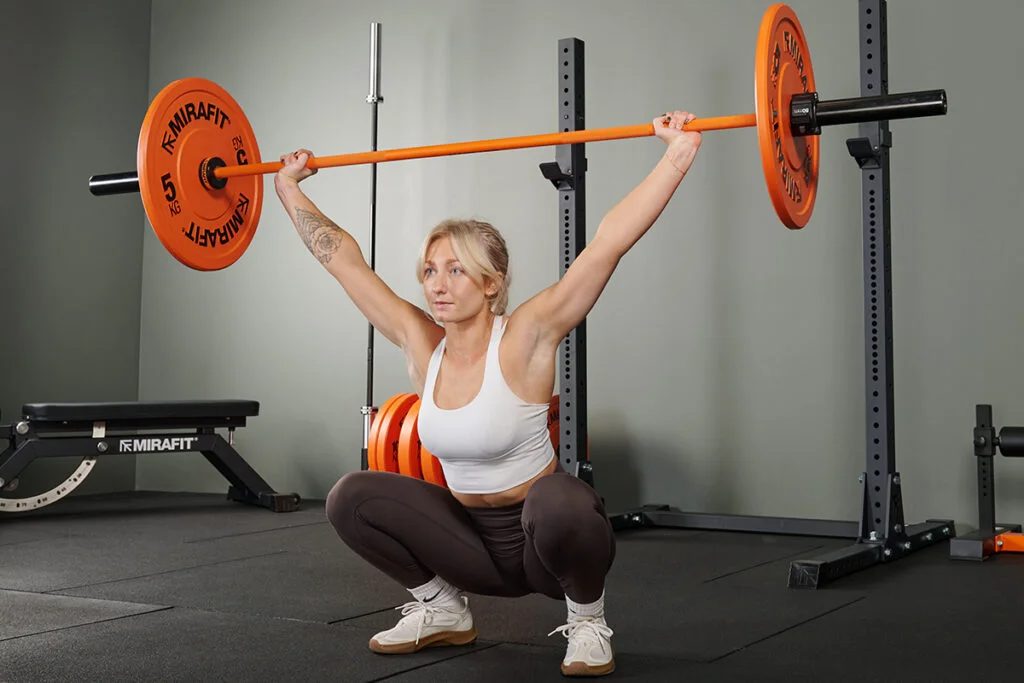
Functional Strength Training vs Traditional Powerlifting for Rowers: The Evidence for Effectiveness and Safety
Rowing demands exceptional physical conditioning across multiple domains: cardiovascular endurance, muscular power, strength, and precise movement coordination. As strength training has become an integral component, coaches and athletes face an important choice. This article examines the scientific evidence supporting functional training approaches for rowers and why it is safer and yields increased athleticism compared to traditional powerlifting.
The Performance Case for Functional Training
Superior Training Adaptations
A 2024 meta-analysis involving 1,718 athletes revealed significant moderate to large effects of functional training on key performance qualities essential for rowing:
Maximum Strength: ES = 2.68
Power: ES = 0.68
Muscle Endurance: ES = 4.13
These effect sizes demonstrate that functional training produces substantial improvements across all strength qualities, with less injury risk and greater sport specificity than traditional lifting.
Sport-Specific Transfer
Functional training movements, which emphasize rapid force production, better develop the explosive power component crucial for rowing.
Research on collegiate rowers found that vertical jump performance was the single best predictor of rowing performance (500m time trial speed).
Functional exercises, like the front squat, may be the single best exercise for rowing performance, as it emphasizes the front-end loading patterns used in rowing while maintaining better movement quality than traditional back squats.
The Safety Advantage
Lower Injury Rates in Functional Training
While traditional resistance training is generally safe, when comparing traditional powerlifting specifically to functional approaches, the evidence strongly favors functional training.
Research on powerlifters found that 70% (73/104) of participants were currently injured, and 87% had experienced an injury within the past 12 months.
The injury incidence in powerlifting ranges between 1.0–4.4 per 1000 hours, with the low back, shoulders, and knees being the most affected areas—precisely the areas most vulnerable in rowers.
Functional exercises like the front squat put less shear force on the lower back than the back squat, reducing injury risk while building leg strength for the rowing stroke.
Addressing Muscle Imbalances
Rowers need strength training for the non-rowing muscles that are underdeveloped by the stroke to improve muscle balance and reduce injury risk. Functional training naturally addresses these imbalances by incorporating multi-planar movements and emphasizing stabilization, whereas traditional powerlifting often exacerbates imbalances through unidirectional loading.
Proprioceptive and Balance Training Benefits
One of the most significant advantages of functional strength training lies in its integration of proprioceptive and balance components.
Enhanced Body Awareness and Movement Control
Proprioceptive training had a positive influence on various aspects of athletic performance, including balance, explosive strength, speed, agility, and reduction of chronic joint instability.
Research demonstrates that proprioceptive performance improved by 41% (range 21–74%) in athletes participating in balance-focused training.
For rowers, better proprioception allows for more efficient decelerations and greater understanding of how the body is moving, preventing unnecessary movements caused by being out of position. This is paramount for dealing with the dynamic challenges of water conditions and boat stability.
Integration of Balance Components
Unlike traditional powerlifting, functional strength training can incorporate balance challenges through:
Single-limb variations (e.g., single-leg step-ups).
Unstable surfaces.
Perturbation training.
This integration is naturally achieved in well-designed functional programs, enhancing body awareness that transfers directly to injury prevention.
Implementation Guidelines
Exercise Selection Principles
Effective functional strength training for rowers should emphasize:
Multi-joint, compound movements that mirror rowing mechanics.
Unilateral and rotational exercises to address asymmetries.
Core stabilization integrated into all movements.
Power development through explosive, sport-specific patterns.
Programming Considerations
High volume strength training can lead to 'residual fatigue' and sub-optimal adaptations in rowing performance. Functional approaches emphasize quality of movement and sport-specific adaptation over maximal loading.
Safety Protocols: Proper technique and completion of a full range of motion are paramount. Exercises must stimulate the actual athletic activity as specifically as possible.
Conclusion
The evidence strongly supports functional strength training over traditional powerlifting for rowers. Functional training produces significant improvements in maximum strength, power, and muscle endurance while maintaining superior safety profiles.
Given that powerlifting shows high injury rates (70% currently injured) concentrated in areas critical to rowing, and that 50% of rowing injuries occur during off-water training, functional strength training provides the optimal balance of performance enhancement and injury prevention for rowing athletes. Coaches should prioritize movement quality, sport-specific patterns, and balanced development over maximal loading.