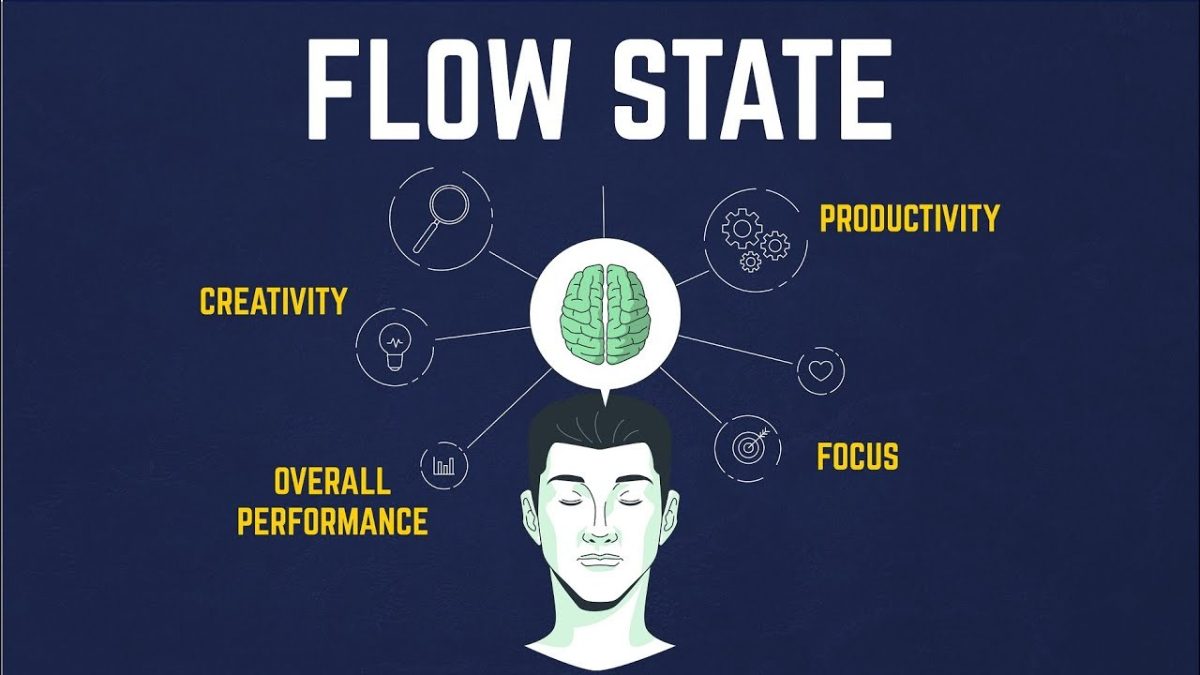
Training Your Brain for Flow: The Neuroscience of Daily Movement Practice
The Science Behind Making Flow Accessible
Have you ever experienced that magical state where everything seems effortless, time disappears, self-consciousness fades, and you're completely absorbed? That's flow—and it's trainable. Daily movement practice can help your brain access flow states more reliably by leveraging how your nervous system learns, adapts, and specializes.
What Happens in Your Brain During Flow
Recent neuroscience research shows:
Flow involves specialized neural networks taking over, reducing conscious supervision.
Brain scans of performers in flow show reduced frontal lobe and default-mode network activity, meaning less analytical interference.
Flow requires an optimal physiological arousal—not too low (boredom) or too high (stress).
Your brain experiences flow as automatic, rewarding, optimal, and effortless once control shifts from explicit to implicit systems—but this requires specific, structured training.
The Power of Neuroplasticity: Your Brain's Adaptability
Your brain rewires itself based on what you practice—a phenomenon called neuroplasticity, crucial for skill learning and flow development.
Cellular-Level Changes
Synaptic Strengthening: Repeated practice forms new synapses and strengthens existing ones.
Myelination: Myelin sheaths grow around active neurons, speeding and smoothing signal transmission.
Neurotrophic Factors: Exercise boosts BDNF and other growth factors, promoting new connections and protecting existing ones.
Structural Changes: Repeated movement triggers structural adaptations that enhance behavioral flexibility.
Implication: Practicing flow sequences builds the neural infrastructure for effortless flow.
From Conscious Control to Automatic Mastery
The Three Stages of Skill Acquisition
Cognitive (Conscious and Effortful):
High prefrontal activation, movements clunky, flow impossible.
Associative (Refining and Connecting):
Skills begin automating while still refined consciously. Flow becomes possible but inconsistent.
Autonomous (Automatic and Effortless):
Movement patterns run automatically; cognitive resources free up for flow.
Key Insight: Overthinking disrupts automaticity—automaticity is achieved through extensive rehearsal.
Daily Flow Practice Principles
Establish Automaticity: Repetition of foundation movements.
Layer Complexity: Add new elements once basics are automatic.
Create Flow Opportunities: Match automatic skills with challenges.
Repetition with Variation: The Goldilocks Principle
Pure rote repetition can hinder learning.
Variation enhances long-term skill acquisition.
Three-intensity practice:
Morning: Normal speed (learning pattern)
Midday: Double speed (challenge)
Evening: Half speed (refinement)
Myelination Effect: Repetition strengthens neural connections, improves speed and precision, and supports injury prevention.
Spaced Practice & Neural Consolidation
Multiple short sessions per day consolidate memory better than one long session.
Frequent feedback enhances learning.
The three-session structure aligns with neuroscience principles for robust skill acquisition.
Building Flow-Ready Neural Architecture
Develop Specialized Neural Networks: Dedicated circuits enable entire sequences to fire automatically.
Reduce Cognitive Overhead: Daily practice shifts control from prefrontal areas to automatic systems.
Optimize Arousal Regulation: Breathwork helps maintain calm alertness—the physiological signature of flow.
Enhance Challenge-Skill Calibration: Progressive practice ensures exercises are challenging but manageable.
The Compound Effect: Small Daily Investments
Neural Efficiency Gains
Exercise boosts neuroplasticity, synaptic strength, and cerebral blood flow.
Automatic movements free cognitive resources for higher-level integration and creative expression.
Transfer Effects
Neural improvements transfer beyond practiced movements, facilitating flow in work, creativity, and daily life.
Building Flow Habits
Consistent practice strengthens neuronal patterns supporting habitual flow.
Brain learns to recognize flow routines, making flow more predictable.
Practical Path: From Science to Daily Practice
Start Where You Are: Tailor activities to your current level.
Embrace Repetition with Variation: Reinforce core patterns while challenging your brain.
Trust the Process: Consistency drives neural change.
Practice Letting Go: Reduce conscious monitoring; allow automatic networks to guide movement.
Monitor Flow, Not Perfection: Focus on flow experience over flawless execution.
The Bottom Line
Flow is a trainable brain state. Daily movement practice works because it:
Builds specialized neural networks through repetition with variation
Creates automaticity via implicit system reliance
Optimizes arousal regulation with integrated breathwork
Strengthens neuroplasticity via physical activity and growth factors
Trains challenge-skill calibration through progressive difficulty
Every session is an investment in flow-generating capacity. Today’s foundational movements become tomorrow’s automatic baseline, making flow accessible on demand.
References
Flow State Neuroscience
Alameda, C., Sanabria, D., & Ciria, L. F. (2022). The brain in flow: A systematic review on the neural basis of the flow state. Cortex, 154, 348-364.
Drexel University. (2024, March 5). Your brain in the zone: Neuroimaging study on creative flow.
Kounios, J., & Rosen, D. (2024). Neural mechanisms of creative flow states in jazz musicians.
van der Linden, D., et al. (2021). The neuroscience of the flow state. Frontiers in Psychology, 12, 645498.
Neuroplasticity and Physical Exercise
Budson, A. E. (2025). Tips to leverage neuroplasticity to maintain cognitive fitness. Harvard Health Publishing.
Cotman, C. W., & Berchtold, N. C. (2013). Beneficial effects of physical exercise on neuroplasticity and cognition. Neurosci Biobehav Rev, 37(9), 2243-2257.
Motor Learning and Skill Acquisition
Chiviacowsky, S., & Wulf, G. (2007). Feedback after good trials enhances learning. Res Q Exerc Sport, 78(2), 40-47.
Hardwick, R. M., et al. (2019). Skill acquisition is enhanced by reducing trial-to-trial repetition. J Neurophysiol, 122(6), 2460-2471.
Automaticity and Neural Mechanisms
Poldrack, R. A., et al. (2005). The neural correlates of motor skill automaticity. J Neurosci, 25(22), 5356-5364.
Reis, J., et al. (2009). Noninvasive cortical stimulation enhances motor skill acquisition. PNAS, 106(5), 1590-1595.
Motor Imagery and Mental Practice
Avanzino, L., et al. (2015). Motor cortical plasticity induced by motor learning through mental practice. Front Behav Neurosci, 9, 105.
Repetitive Practice and Feedback
Schmidt, R. A., & Lee, T. D. (2011). Motor control and learning: A behavioral emphasis (5th ed.).
Wulf, G., & Shea, C. H. (2002). Principles derived from the study of simple skills do not generalize to complex skill learning. Psychon Bull Rev, 9(2), 185-211.
Applied Practice Resources
American Psychological Association. Practice for knowledge acquisition.
Science for Sport. Skill acquisition.
Further Reading
Search terms:
"Flow state neuroscience"
"Exercise neuroplasticity BDNF"
"Motor learning automaticity"
"Challenge-skill balance flow"
"Deliberate practice expertise"
"Transient hypofrontality hypothesis"
Books
Csikszentmihalyi, M. (2008). Flow: The psychology of optimal experience. Harper Perennial.
Kotler, S., & Wheal, J. (2017). Stealing Fire. Dey Street Books.
Doidge, N. (2007). The brain that changes itself. Penguin Books.